The Widow’s Two Coins: When God Measures Sacrifice Differently Than We Do

What Jesus saw in the temple treasury that day changes everything about how we measure worth
The Scene at the Temple Treasury
Mark 12 takes us to the Court of Women in Jerusalem’s temple, where thirteen trumpet-shaped collection boxes lined the walls. This was the busiest, most public place for religious giving—a space where wealthy donors could make their contributions known, where the clinking of coins announced generosity, where giving was as much social performance as spiritual devotion. Jesus had just finished condemning the teachers of the law who devoured widows’ houses and made lengthy prayers for show. Now He sat down opposite the treasury—not rushing through, but deliberately watching, observing how people gave.
The contrast is stark and intentional. Mark wants us to see what Jesus saw: the parade of wealthy contributors making their impressive donations, the sound of substantial gifts dropping into the receptacles, the visible generosity that everyone could admire. And then—almost missable in the crowd—a widow. Poor. Anonymous. Contributing two lepta, the smallest coins in circulation, together worth less than a penny. In any human calculation, her gift was negligible. Hardly worth recording. Certainly not worth stopping the narrative to mention.
But Jesus stopped. He noticed. And what He said next turned every human measure of sacrifice upside down.
Free Advent reading · December 1–25
25 Names of Christ
One name a day in your inbox: the verse it comes from, a short reflection, a one-line prayer. It ends on Christmas morning.
One email a day, December 1–25. Unsubscribe anytime.
The Measure God Uses
This wasn’t hyperbole. Jesus wasn’t exaggerating for effect or giving a participation trophy. He was revealing divine mathematics: the widow gave more. Not more in amount—more in reality. More in the kingdom currency that actually matters. While the wealthy gave from their surplus, from what they wouldn’t miss, from accounts that would hardly notice the deduction, she gave from her deficit. She gave what she needed. She gave her security. She gave, as Jesus put it with stunning precision, “all she had to live on.”
The two coins were “lepta,” the least valuable coins in Jewish currency—worth about 1/64 of a denarius (a day’s wage). Jewish law actually exempted the poor from certain offerings, making her gift entirely voluntary. The original Greek phrase “holon ton bion” (all her living) carries the sense of her entire means of subsistence, her whole livelihood. She didn’t give part of what she had left—she gave what she had left.
The Greek word translated “poverty” here is hysterēmatos—it means deficiency, what falls short, deprivation. She gave from her lack. Meanwhile, the word for what the rich gave from is perisseuontos—abundance, surplus, more than enough. This isn’t about percentages or tithing calculations. This is about where the gift comes from in the geography of your life. Does it come from the overflow, the extra, the comfortable margin? Or does it come from the place where you’re vulnerable, where you’re dependent, where giving means truly trusting God with what you need?
Jesus gathered His disciples—these men He was training to lead His church—and made sure they saw this. Made sure they understood. In God’s economy, sacrifice isn’t measured by what you give but by what you keep. It’s not calculated by the size of the gift but by the size of the trust required to release it.
What This Means for How We Live
This passage confronts our entire framework for evaluating worth, contribution, and spiritual devotion. We live in a culture that celebrates impressive gifts, public generosity, donations that make a visible difference. We name buildings after major donors. We honor those whose giving moves the needle. We measure ministry success by budget size and facility growth. None of this is wrong—but the widow’s story insists that we’re often looking at the wrong metrics entirely.
God sees what we risk, not just what we give. He sees what the gift costs us, not just what it contributes to the total. He measures our trust, not our treasury. The wealthy donors that day gave generously by human standards—and their gifts genuinely mattered for the temple’s work. But they went home with their security intact, their lifestyles unchanged, their futures unaffected. They gave without vulnerability.
The widow gave with radical vulnerability. She walked away from that temple treasury with nothing. Her next meal was uncertain. Her security was gone. She had moved from having barely enough to having nothing at all—and she did it as an act of worship. What kind of faith does that require? What depth of trust in God’s provision? What freedom from the stranglehold of security and control?
This challenges us at the deepest levels. We might think: “If I had more, I’d give more. When my income increases, I’ll increase my giving. Once I’m financially stable, then I can be truly generous.” But the widow’s story exposes that reasoning as backwards. Generosity that costs us nothing reveals nothing about our faith. It’s the gift that makes us vulnerable, that requires us to depend on God, that forces us to trust His provision beyond our visible resources—that’s the gift that captures His attention and grows our souls.
Living in the Widow’s Economy
Recognition vs. Reality
Human eyes see the amount and the impact. Divine eyes see the sacrifice and the trust. We can spend our lives chasing recognition for impressive contributions, or we can pursue the quiet faithfulness that God notices—the kind that often goes completely unacknowledged by everyone except Him.
Surplus vs. Substance
There’s a fundamental difference between giving from abundance and giving from need. One requires calculation and planning. The other requires faith and surrender. Both matter, but only one transforms us. Only one teaches us what it means to depend entirely on God’s faithfulness.
Security vs. Trust
Every time we give in a way that actually costs us something—that makes us vulnerable, that requires us to trust God with an uncertain outcome—we’re actively choosing trust over security. We’re declaring that God’s care for us is more real than our bank balance, more reliable than our emergency fund, more certain than our five-year plan.
This doesn’t mean recklessness or irresponsibility. The widow wasn’t being foolish—she was being faithful. There’s a difference. She knew exactly what she was doing when she placed those two coins in the treasury. She was choosing to honor God with what she had, trusting that the God who sees sparrows fall and numbers the hairs on our heads would see her too. Would know her need. Would provide.
The invitation here isn’t to poverty or to giving away everything irresponsibly. It’s to a posture—a way of holding everything we have with open hands, recognizing that it’s all God’s anyway, and being willing to release whatever He asks whenever He asks it. It’s about cultivating the kind of trust that doesn’t need to see the whole picture before obedience. The kind of faith that gives not because we can afford it, but because we believe God is faithful.
Maybe that looks like giving when it genuinely stretches you financially. Maybe it means volunteering time you don’t feel you have to spare. Maybe it’s using your gifts in ways that won’t advance your career or build your platform. Maybe it’s choosing generosity in relationships where you’ll never get credit, making sacrifices that will never be recognized, investing in people and purposes that won’t pay visible dividends. Whatever form it takes, widow-economy living means giving from the place where it costs you something—where you have to trust God with the gap between what you’re releasing and what you can see coming.
What Jesus saw in the temple treasury that day wasn’t just a financial transaction. He saw a heart fully surrendered. He saw trust made tangible. He saw worship that cost everything. And He called His disciples over to make sure they understood: This is what kingdom sacrifice looks like. Not impressive amounts that leave our lives unchanged, but radical trust that makes us vulnerable to God’s faithfulness. That’s what moves His heart. That’s what He notices. That’s what matters in the economy of heaven.
Live What You Believe
At JT4Christ, we’re committed to helping you root your life in biblical truth—the kind that transforms how you see everything, including sacrifice, generosity, and trust. Explore our faith-inspired apparel and resources that remind you daily of God’s faithfulness and call you to radical trust.
Shop NowFrom the shop
Scripture to wear and give, printed to order.
-
✝Mark 10:8

Our First Christmas Married Ornament | Personalized Mr & Mrs, Mark 10:8
$22.00 Select options This product has multiple variants. The options may be chosen on the product page -
✝2 Corinthians 5:21
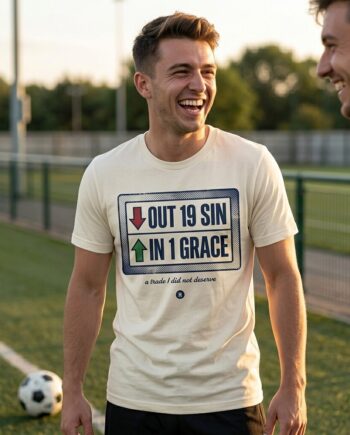
Substitution | 2 Corinthians 5:21 Soccer Tee
Price range: $30.00 through $36.00 Select options This product has multiple variants. The options may be chosen on the product page -
✝2 Corinthians 5:17
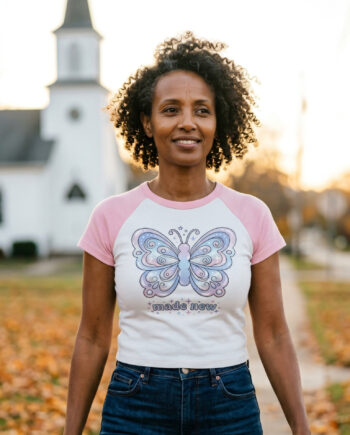
Made New Y2K Butterfly Baby Tee | 2 Corinthians 5:17
$34.00 Select options This product has multiple variants. The options may be chosen on the product page

Keep reading
- Psalm 136 Bible Study: Gratitude as RememberingBible Study
- The Bereans and Acts 17:11: Receive the Word, Then Test ItBible Study
- Know That the LORD Is God: A Four-Week Psalm 100 StudyBible Study
- Four Weeks to Belonging: A Study for Groups Just Getting StartedBible Study
- When God Restores What Locusts Destroyed: Joel’s Promise of RenewalFaith & Encouragement
- What the Persistent Widow Teaches Us About Praying When God Seems SilentBible Study
More in: Bible Study · Faith & Encouragement · All articles