Know That the LORD Is God: A Four-Week Psalm 100 Study
Why Psalm 100 is more than a table verse
Psalm 100 gets read at Thanksgiving tables as a happy verse about being glad. That is not wrong, but it makes thanks sound like a report on how we feel. The psalm does something else. It gives orders. It tells people to make a noise, to serve, to come, to know, to enter, to bless. It reads like a liturgy, the words said on the way into a place where God is worshiped.
This study takes that reading as its lens. It is a lens, not a settled fact, and I will say where the evidence is thin. The study runs four weeks, one section of the psalm per session, 45 to 60 minutes each. Nov 1, 2026 is a Sunday, so sessions in the weeks of Nov 1, 8, 15 and 22 end in the week of US Thanksgiving, Thursday, Nov 26. Canadian Thanksgiving falls in October, so this timing is for US groups. Read from the King James Version (KJV) or the World English Bible (WEB). Both are public domain, and the two differ in one place that matters, covered in Week 2.
Free Advent reading · December 1–25
25 Names of Christ
One name a day in your inbox: the verse it comes from, a short reflection, a one-line prayer. It ends on Christmas morning.
One email a day, December 1–25. Unsubscribe anytime.
Before you begin: the title and the command to know
The Hebrew title is mizmor letodah. It can mean “a psalm of thanksgiving” or “a psalm for the thanksgiving (todah) sacrifice.” Ancient and medieval readers took it both ways, so the meaning is ambiguous. The law of that offering is in Leviticus 7:12-15, which includes cakes and a rule about eating the meat the same day. Read it before Week 1 if you can. A rabbinic tradition says the psalm was recited when the thank offering was sacrificed, but that is a later tradition, not first-century evidence. The psalm is anonymous and undated, and we should not claim more. What the title does tell us is that thanks here is something you bring, with a body and a place, not only something you feel.
The psalm has five verses and a clear movement. Verses 1-2 are a summons. Verse 3 is a confession. Verse 4 is the entrance. Verse 5 gives the reason. The center is verse 3, and it opens with a command we do not expect in a song of joy: “Know ye.” Some commentators find that command out of place among the shouting and singing. This study treats it as the spine. Each week we ask how the section we are reading depends on knowing who the LORD is.
Week 1: The summons (Psalm 100:1-2)
Make a joyful noise unto the LORD, all ye lands. Serve the LORD with gladness: come before his presence with singing. (KJV)
Observe
Read the whole psalm aloud, then count the commands. In the KJV I count seven: make a joyful noise, serve, come, know, enter, be thankful, bless. Notice that gladness is attached to serving. Notice who is addressed, “all ye lands,” and who is named, the LORD.
What it meant then
The verb behind “make a joyful noise” is a shout or cry of acclamation, the sort given to a king. The familiar idea that it licenses off-key singing misses the point. What matters is whom the noise is for. Wiersbe places Psalm 100 among the royal or enthronement psalms (93, 95-100), where the LORD is acclaimed as ruler. “All ye lands” is a real open question. The psalm may address Israel, or all the earth, and the choice affects how you read it. Name that openly with your group and do not force an answer.
What it asks now
Gladness is commanded here, which means it cannot be only a mood. A command to be glad is strange if gladness is just a feeling that arrives or does not. It makes better sense if gladness is how one serves, a way of doing the work. Ask your group what changes if thanks is something you do before you feel it.
Week 2: The confession. Know that the LORD is God (Psalm 100:3)
Know ye that the LORD he is God: it is he that hath made us, and not we ourselves; we are his people, and the sheep of his pasture. (KJV)
Observe
List every claim the verse makes. The LORD is God. He made us. We are his. We are his flock. Notice that the verse says nothing yet about what we feel or what we have received.
The textual question
Here the KJV and WEB part ways, and you should tell your group before someone finds it on their phone. The Hebrew has a written form (Ketiv, lo’, “not”) and a traditional reading (Qere, lo, “to him”). The two sound identical. The written text gives “and not we ourselves,” which the KJV follows. The Qere gives “we are his,” which the WEB follows. The textual evidence is inconclusive. Either way the point holds: God made us, and we belong to him. Let the group notice that the difference is small and that both readings land in the same place.
What it meant then
“Know” in this verse is more than having information. In this study we read it as acknowledging, a covenant word, owning a fact and living under it. Working Preacher calls it one more imperative that grounds the psalm in God’s sole authority and in the people’s identity as his creation. The sheep image is not a joke at our expense. Sheep language in Scripture belongs to God’s kingship and his shepherding of his people. See Psalm 95:6-7, which has the same flock language and a call to worship, followed by a warning about hardened hearts. See also Ezekiel 34:30-31, where the LORD calls his people his flock and himself their God. Knowing, in Psalm 95, sits right beside the danger of forgetting.
What it asks now
The psalm speaks to the covenant people. For Christian groups, taking “we are his people” as ours is application, made through the New Testament, not the plain claim of the psalm itself. Say so honestly. Then ask what it means in practice to be owned, and what a week looks like for someone who believes it.
Week 3: The entrance (Psalm 100:4)
Enter into his gates with thanksgiving, and into his courts with praise: be thankful unto him, and bless his name. (KJV)
Observe
Thanksgiving and praise are not the reward at the end of the visit. They are how you get in. Mark the places: gates, courts. Mark the last two commands, be thankful and bless.
What it meant then
This is where the liturgical reading is strongest. The imperatives and the gates and courts read like words for a procession toward the temple. Some link the setting to a particular festival, but that connection is inference, and I would say only that the psalm “likely” fits a processional use. Compare two other entrance texts. Psalm 24:3-4 asks who may go up to the LORD’s hill and stand in his holy place. Psalm 118:19-20 asks for the gates of righteousness to be opened and calls the LORD’s gate the place where the righteous enter. Psalm 24 asks about readiness. Psalm 100 answers with what you bring.
What it asks now
People often wait to feel ready before they come to worship, to pray, or to a table of thanks. The psalm reverses the order. You come in because of who God is, and the thanks is the way in. Ask your group what practices work as gates for them. A spoken thanks before a meal, a Sunday arrival, a sung line in the car. Keep it concrete.
Week 4: The reason. The LORD is good (Psalm 100:5)
For the LORD is good; his mercy is everlasting; and his truth endureth to all generations. (KJV)
Observe
The verse begins with “For,” so it is giving the reason for everything before it. Three claims: he is good, his mercy (hesed, steadfast love) is everlasting, his truth, or faithfulness, lasts to all generations.
What it meant then
The ground of thanks is God’s character, not the year’s circumstances. A people who had hard seasons could still say this, because the claim reaches across generations and is not measured by a single one. This is not a promise that thanks produces blessing. The psalm says nothing of the kind. It says the LORD is good, and that is the reason.
What it asks now
Paul tells believers to give thanks in everything, as God’s will for them (1 Thessalonians 5:16-18). I am giving the reference only. The point for this week is that thanks in hard circumstances does not deny the hardness. It names the one who is good inside it. End the session by reading verse 3 aloud together, slowly, as a confession. Then plan the Thanksgiving table. Pick one person to read verse 5 before the meal, and let others add one thing they know about God, not one thing they feel.
Leader notes
If someone says they do not feel thankful, do not argue them toward a feeling. Point to the order of the psalm: summons, confession, entrance, reason. Feeling is not the first step. Honor honest grief in the room and let the psalm’s commands stand.
Three items are contested. Name each plainly and move on: whether “all ye lands” means Israel or the nations, whether the setting is a temple procession, and which reading of verse 3 is original. None of them changes the week’s main point. Keep to time by choosing two questions per session to spend real minutes on, and let the rest go.
Take it home: a table liturgy
Use the psalm’s own words. A leader says, “Know ye that the LORD he is God.” Everyone answers, “It is he that hath made us, and we are his.” The leader says, “Enter into his gates with thanksgiving.” Everyone answers, “For the LORD is good; his mercy is everlasting.” Use the KJV, or the WEB if the Qere reading is preferred. If your group likes a hymn, the Old Hundredth is William Kethe’s metrical version of Psalm 100, sung to a tune by Loys Bourgeois from the Genevan Psalter. It makes a good way to close the last session.
Questions for discussion
- Verses 1-2 give commands about joy and service. What changes in how you think about gladness if it is something done in obedience and not only something felt?
- The psalm may address Israel or all the earth. How does each reading change the way you hear “all ye lands,” and what do you do with a question the text leaves open?
- What do you think “know” means in verse 3, and how is knowing that the LORD is God different from agreeing that he exists?
- Given that the KJV and WEB read verse 3 differently, what stays true under either reading, and what would you say to someone worried the difference makes the verse unreliable?
- Verse 4 says thanksgiving is the way in. Describe one specific practice that works as a gate for you and what it takes to keep doing it when you do not feel like it.
- Verse 5 grounds thanks in God’s goodness and faithfulness across generations. How would you explain that ground to someone going through a hard year?
From the shop
Scripture to wear and give, printed to order.
-
✝Psalm 46:5

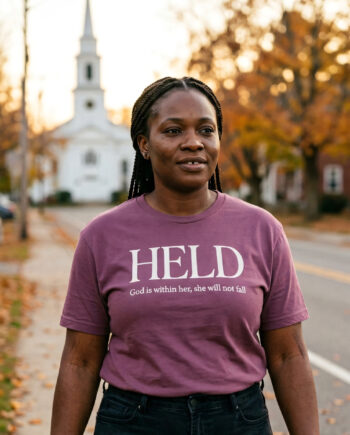
Held | Psalm 46:5 Tee for Women
Price range: $34.00 through $38.00 Select options This product has multiple variants. The options may be chosen on the product page -
✝Psalm 46:10
Coffee and Quiet Time Retro Hoodie | Psalm 46:10
Price range: $49.00 through $51.00 Select options This product has multiple variants. The options may be chosen on the product page -
✝Psalm 95:6
O Come Let Us Adore Him | Psalm 95:6 Christmas Crewneck & Tee
Price range: $34.00 through $56.00 Select options This product has multiple variants. The options may be chosen on the product page


Keep reading
- Psalm 136 Bible Study: Gratitude as RememberingBible Study
- The Bereans and Acts 17:11: Receive the Word, Then Test ItBible Study
- Four Weeks to Belonging: A Study for Groups Just Getting StartedBible Study
- You Belong Here: A Study Through Romans 8 on Adoption in ChristBible Study
- Christian Gifts for Teachers: Sunday School, Christian School and HomeschoolChristian Living
- Thus Far: A Stone for the Year You Barely Made ItDevotional
More in: Bible Study · All articles