The Test That Redefined Faith
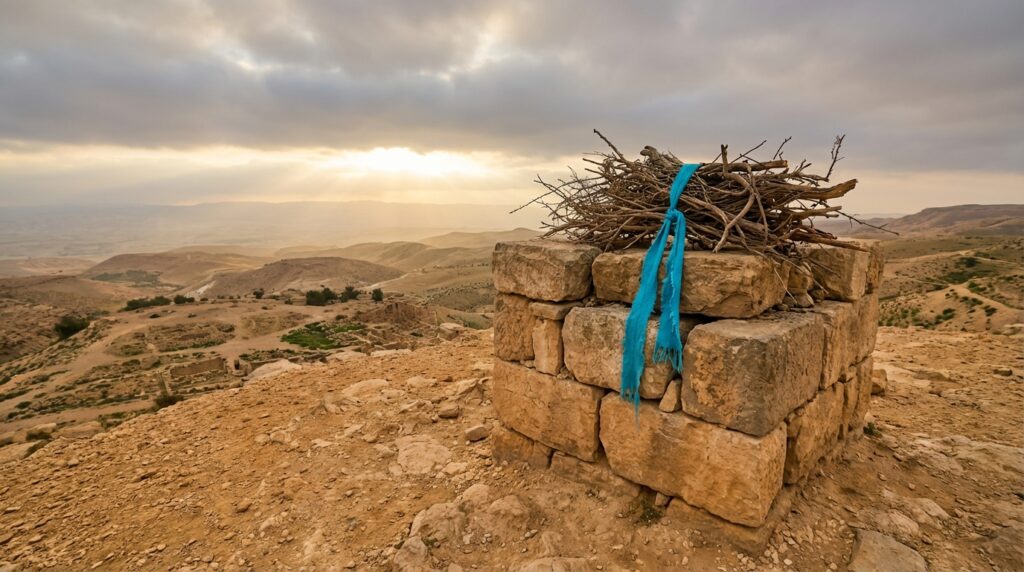
The story of Mount Moriah and the God who sees our surrender before we make it
The Test That Redefined Faith
Genesis 22 opens with a statement that should stop us in our tracks: “After these things God tested Abraham.” This isn’t the beginning of Abraham’s journey with God — it comes after decades of relationship, after the miraculous birth of Isaac, after covenant promises confirmed. Abraham is roughly 120 years old. Isaac, the child of promise for whom he waited twenty-five years, is now a young man. Everything Abraham has hoped for, everything God has promised about nations and blessings and descendants as numerous as stars — all of it hinges on Isaac.
Then God speaks: “Take your son, your only son Isaac, whom you love, and go to the land of Moriah, and offer him there as a burnt offering on one of the mountains of which I shall tell you.”
The Hebrew text is deliberately repetitive and tender: “your son, your only son, whom you love.” God isn’t ignorant of what He’s asking. He names the cost precisely. This isn’t a request for religious ritual — it’s a test of whether Abraham trusts God more than he trusts God’s gifts. The very next verse tells us Abraham rose early in the morning and set out. No recorded argument. No negotiation. Just obedience that must have felt like death.
Free Advent reading · December 1–25
25 Names of Christ
One name a day in your inbox: the verse it comes from, a short reflection, a one-line prayer. It ends on Christmas morning.
One email a day, December 1–25. Unsubscribe anytime.
The Mountain Where God Sees
The journey to Moriah takes three days. Imagine those days — the silence between father and son, the weight of the wood Isaac carries on his back, the knife and fire Abraham carries in his hands. On the third day, Abraham sees the place from a distance. He tells his servants something stunning: “Stay here with the donkey while I and the boy go over there. We will worship and then we will come back to you.”
We. Will. Come. Back. Either Abraham believes God will stop him, or he believes God can raise the dead. Hebrews 11:19 tells us it was the latter: “Abraham reasoned that God could even raise the dead, and so in a manner of speaking he did receive Isaac back from death.” This is faith that has moved beyond bargaining into a terrifying surrender: God is good even when His commands seem to contradict His promises.
The location is significant. Moriah means “the Lord will see” or “the Lord will provide.” Jewish tradition identifies this mountain with the Temple Mount in Jerusalem, where Solomon would later build the temple — and where, two thousand years after Abraham, another beloved Son would carry wood on His back up a hill to become a sacrifice. The parallels are not coincidental. Abraham’s near-sacrifice of Isaac foreshadows the Father’s actual sacrifice of Jesus, the Son He would not spare.
Then comes the question that must have pierced Abraham’s heart: “Father? The fire and wood are here, but where is the lamb for the burnt offering?” Abraham’s answer is both evasive and prophetic: “God himself will provide the lamb for the burnt offering, my son.” And they walked on together — the father who must have been dying inside, the son who trusted his father’s word.
The God Who Calls Your Name Twice
Abraham builds the altar. He arranges the wood. He binds Isaac and lays him on top. He reaches out his hand and takes the knife. And then — in the most critical moment of the entire narrative — the angel of the Lord calls to him: “Abraham! Abraham!”
God calls his name twice. In Hebrew, this repetition signals urgency, affection, divine attention. God called “Moses, Moses” at the burning bush. He called “Samuel, Samuel” in the temple. He called “Saul, Saul” on the Damascus road. When God doubles your name, He’s interrupting your trajectory with grace. He’s stopping you at the threshold of devastating loss to reveal something you couldn’t have known any other way.
“Now I know that you fear God.” Not that God learned something He didn’t know — but that Abraham’s internal reality became external action. The fear of God isn’t terror; it’s the reverence that trusts His character even when you cannot trace His hand. Abraham passed the test not when he raised the knife, but when he first said yes in his heart. God saw the surrender before the sacrifice was complete.
Abraham looks up and sees a ram caught in a thicket by its horns. God provided. Not early enough to prevent the journey. Not early enough to avoid the grief of those three days. But exactly on time — at the moment when surrender was complete and faith had nothing left to prove. Abraham names the place “The Lord Will Provide,” and the text adds, “And to this day it is said, ‘On the mountain of the Lord it will be provided.'”
What This Mountain Means for Us
We are not called to sacrifice our children on literal altars, but we are all called to Moriah moments — times when God asks us to release our grip on the very things we believe we cannot live without. The test isn’t whether we perform the action, but whether we trust the character of God enough to say yes before we see the provision.
The Idol We Don’t See
Sometimes God’s gifts become functional gods. Abraham loved Isaac — but if Isaac became more central to Abraham’s hope than God Himself, then Isaac was an idol. God doesn’t ask us to love people less; He asks us to love Him most. When anything eclipses God in our trust or devotion, He lovingly exposes it — not to take our joy, but to secure it in something unshakable.
The Timing We Don’t Control
God could have stopped Abraham at the bottom of the mountain. He didn’t. The three-day journey, the climb, the building of the altar — all of it was necessary. Sometimes God’s provision comes at the last possible moment because that’s when our faith is most refined and His glory is most clear. The delay isn’t cruelty; it’s precision.
The Provision We Don’t Expect
Abraham expected to sacrifice Isaac. God provided a ram. We think we know what surrender will cost us, but God always has a better plan. He sees what we cannot: the provision already on the mountain, the redemption already in motion, the way He will turn our obedience into blessing beyond our imagining.
Here’s the truth that holds us when the knife is in our hand: God will never ask you to do what He was unwilling to do. Abraham didn’t have to sacrifice Isaac — but two thousand years later, on a hill not far from Moriah, God would not stop the sacrifice. He would watch His Son die. He would let the knife fall. Because the ram caught in the thicket was only ever a placeholder for the Lamb of God who would take away the sin of the world.
When God calls your name twice, He’s not calling you to loss — He’s calling you to trust. He’s inviting you to discover that He is enough, even when everything else is on the altar. He’s showing you that surrender is the pathway to provision you couldn’t orchestrate yourself. The God who provided a ram for Abraham provided a Lamb for the world. And He will provide for you.
Wear Your Faith
Let your clothing be a reminder that God provides, even on the mountains where faith is tested. Explore faith-inspired apparel that speaks truth into your everyday moments.
Shop NowFrom the shop
Scripture to wear and give, printed to order.
-
✝Genesis 1:1

Elohim | Genesis 1:1 Tee
Price range: $34.00 through $40.00 Select options This product has multiple variants. The options may be chosen on the product page -
✝Genesis 8:22
Seedtime and Harvest Shall Not Cease | Genesis 8:22 Tee & Sweatshirt
Price range: $34.00 through $72.00 Select options This product has multiple variants. The options may be chosen on the product page -
✝Genesis 8:22
Seedtime and Harvest Shall Not Cease | Genesis 8:22 Print
Price range: $29.00 through $99.00 Select options This product has multiple variants. The options may be chosen on the product page

Keep reading
- Youth Group Shirt Ideas: Christian Tees Teens Will Actually WearChristian Living
- Christian Gifts for Dad: 8 Faith-Based Gifts He Will UseChristian Living
- Who You Are in Christ: Your Identity, and the Shirts That Say It Out LoudChristian Living
- Bible Verse T-Shirts: How to Wear Scripture That Actually Means SomethingBible Study
- The Midday Meeting That Changed EverythingFaith & Encouragement
- The Night Heaven and Earth Held Their BreathFaith & Encouragement
More in: Faith & Encouragement · All articles