The Voice That Speaks Over Exile

You are not defined by what you’ve lost, but by whose voice speaks your name
The Voice That Speaks Over Exile
Isaiah 43 comes at a crucial moment in Israel’s prophetic history. The people of Judah are facing—or have already experienced—the Babylonian exile. Everything that defined them as a nation has been torn away. The temple, God’s dwelling place among them, lies in ruins. Jerusalem, the city of David, is destroyed. They are strangers in a foreign land, practicing a faith that seems to have failed them, worshiping a God who appears to have abandoned His promises.
Into this context of identity crisis and spiritual despair, God speaks through Isaiah with words so tender and so powerful that they have echoed through every generation since. This isn’t generic comfort. This is the Creator of the universe reminding His people—and us—of something that exile, failure, and loss cannot erase.
Notice how God begins—not with a command to do better, not with a reminder of their failures, but with His own creative work: “who created you… who formed you.” Before Israel did anything right or wrong, before they succeeded or failed, God made them. Their identity starts with His intention, not their performance.
Free Advent reading · December 1–25
25 Names of Christ
One name a day in your inbox: the verse it comes from, a short reflection, a one-line prayer. It ends on Christmas morning.
One email a day, December 1–25. Unsubscribe anytime.
The Weight of Being Called by Name
The phrase “I have called you by your name” carries profound significance in ancient Near Eastern culture and throughout Scripture. To know someone’s name was to have intimate knowledge of their nature and character. When God calls someone by name in the Bible, it’s never casual—it’s a declaration of relationship and purpose.
In Hebrew, the phrase “I have called you by your name” (קָרָאתִי בְשִׁמְךָ, qarati beshimcha) uses a verb form that indicates not just speaking a name, but summoning, claiming, and establishing relationship. This is the same language used when God called Abraham from Ur, when He called Moses from the burning bush, when He called Samuel in the temple. It’s the language of divine election and personal intimacy. In the ancient world, to know and speak someone’s name gave you a claim on their attention and established a covenant bond. God is saying: “I know you completely, I claim you personally, and you belong to Me irrevocably.”
But God doesn’t stop with identity—He addresses the journey that identity must walk through. “When you pass through the waters… when you walk through the fire.” Notice the word “when,” not “if.” God doesn’t promise the absence of trials. He promises His presence within them. The waters of chaos and the fires of judgment—both ancient symbols of overwhelming disaster—will not have the final word. Why? Because “you are Mine.”
This is the theological center of the passage: God’s love for His people is not based on their worthiness but on His decision to set His affection on them. “You were precious in My sight” uses a Hebrew verb (יָקַר, yaqar) that means to be weighty, valuable, esteemed—not because of inherent worth earned through achievement, but because the valuer has chosen to assign that worth. A common stone becomes precious when a master jeweler sees its potential and claims it.
What This Means When Everything Else Fails
We live in a culture obsessed with self-made identity. We are what we achieve, what we earn, what we accomplish, what others think of us. We build our sense of self on the sand of circumstance—career success, relational status, physical ability, financial security, reputation. And then life happens. The diagnosis comes. The job ends. The relationship breaks. The dream dies. And we realize how fragile our self-constructed identity really was.
Isaiah 43 confronts us with a radically different foundation: you are who God says you are, and He said it before you did anything to earn it. Your identity is not achievement-based; it’s creation-based. You didn’t make yourself; He formed you. You didn’t earn His attention; He called you by name. You didn’t purchase His love; He declared you precious because He decided to love you.
What the World Says
Your value depends on your productivity, your appearance, your success, your likability. When these fail, your worth is in question. You must constantly prove yourself, constantly earn your place, constantly fear the moment when you’re no longer enough.
What God Says
Your value was established when He formed you and called you by name. Nothing you do can increase it; nothing you’ve done can diminish it. You are Mine—not because you earned it, but because I chose it. Your worth is a settled fact, not a daily test.
This truth transforms how we face the waters and fires of life. When you lose what you thought defined you, God’s claim on your identity remains. When you walk through circumstances that feel like they will overwhelm or consume you, the One who calls you by name walks with you. The waters cannot drown someone whose identity is anchored in the Creator’s declaration. The fire cannot consume someone whose worth was established before the flames ever came.
Living from Identity, Not for Identity
Understanding that God has already named us, claimed us, and declared our worth changes everything about how we live. We no longer live to establish an identity; we live from an identity that’s already been established. This isn’t passive resignation—it’s the most liberating truth in the world.
When your identity is rooted in God’s declaration rather than human achievement, you can risk without fear of losing yourself. You can fail without being a failure. You can face loss without losing who you are. You can be honest about weakness because your strength was never the foundation anyway. You can extend grace to others because you’re not competing for value—there’s enough of God’s love to go around.
A Prayer of Identity
“Lord, when the waters rise and I forget who I am, remind me that You have called me by name. When the fires burn and I question my worth, let me hear Your voice again: ‘You are Mine.’ Help me to live today not striving to become someone, but resting in the someone You’ve already declared me to be. Let my identity be found in Your unchanging word, not in my changing circumstances. In Jesus’ name, who perfectly fulfilled every word spoken over Israel and extends that same belonging to all who trust in Him. Amen.”
The beauty of Isaiah 43 isn’t just for ancient Israel. Every promise God made to them finds its ultimate fulfillment in Jesus Christ, who walked through the waters of baptism and the fires of judgment in our place. Through faith in Him, God’s words to Israel become God’s words to us: “You are Mine. I have redeemed you. I have called you by name.” Not because we’ve earned it, but because He has spoken it. And what God speaks over you cannot be unspoken by anyone else—not by circumstances, not by failures, not by the enemy, not even by your own doubts.
When you know whose you are, you can face whatever comes with a confidence that doesn’t depend on the outcome. The God who formed you, who calls you by name, who declares you precious—He is with you in the waters, beside you in the fire, and will never let go of His claim on your life. This is not motivational thinking. This is covenantal truth. This is the anchor that holds when everything else gives way.
Wear Your Identity
Remind yourself daily of whose you are with faith-inspired apparel from JT4Christ. Every design points back to the truth that your identity is rooted in God’s unchanging word, not the world’s changing opinions.
Shop NowFrom the shop
Scripture to wear and give, printed to order.
-
✝Isaiah 40:31

Wings as Eagles | Isaiah 40:31 Tee
Price range: $30.00 through $41.00 Select options This product has multiple variants. The options may be chosen on the product page -
✝Isaiah 9:6
Advent Ornament: Peace | Week Two, Isaiah 9:6 (2026)
$22.00 Add to cart -
✝Isaiah 9:6
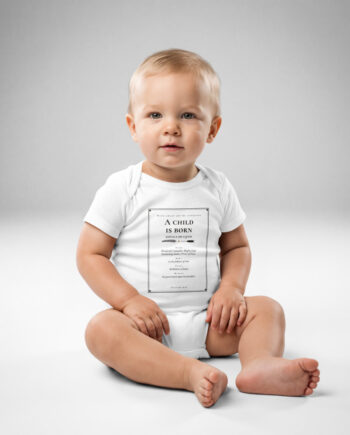
Unto Us a Child Is Born | Isaiah 9:6 Christmas Tee, Crewneck & Bodysuit
Price range: $24.00 through $56.00 Select options This product has multiple variants. The options may be chosen on the product page


Keep reading
- Youth Group Shirt Ideas: Christian Tees Teens Will Actually WearChristian Living
- Christian Gifts for Dad: 8 Faith-Based Gifts He Will UseChristian Living
- Who You Are in Christ: Your Identity, and the Shirts That Say It Out LoudChristian Living
- Bible Verse T-Shirts: How to Wear Scripture That Actually Means SomethingBible Study
- Abraham on the Mountain: The Call That Stopped a KnifeFaith & Encouragement
- The Deceiver Comes HomeFaith & Encouragement
More in: Faith & Encouragement · All articles