The Unlikeliest Encounter
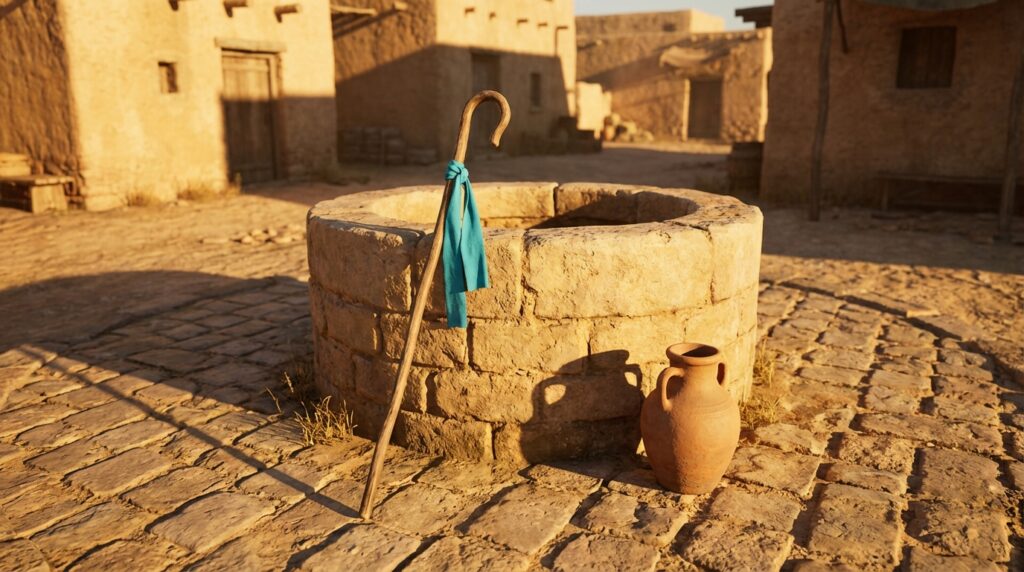
How a midday encounter with a Samaritan outcast reveals the God who seeks us in our hiding
The Unlikeliest Encounter
John chapter 4 opens with a simple phrase that changes everything: “He had to pass through Samaria.” Geographically, this wasn’t true. Most Jews traveling from Judea to Galilee took the long route around Samaria to avoid contact with Samaritans—a people they considered ethnically impure and religiously heretical. The animosity ran centuries deep, rooted in the Assyrian conquest and intermarriage that left Samaritans ethnically mixed and worshiping on Mount Gerizim instead of Jerusalem.
But Jesus “had to” go through Samaria. Not because of geography, but because of mission. There was someone there He needed to meet.
Notice the time: it’s about noon, the sixth hour. This detail matters. Women typically drew water in the early morning or evening when temperatures were bearable and the well became a social gathering place. But this woman comes alone, at midday, when she knows she won’t have to face the judgment in her neighbors’ eyes. She’s already carrying her shame like a heavy water jar, long before Jesus mentions her past.
The phrase “Jews have no dealings with Samaritans” (συγχρῶνται, synchrōntai) literally means they don’t “use together” or share vessels. A Jewish man accepting a drink from a Samaritan woman’s jar would have made him ceremonially unclean by the standards of his day. Jesus crosses three social barriers at once: ethnic (Jew to Samaritan), gender (man to woman alone), and religious purity (accepting her vessel). Every boundary that kept people separated, Jesus intentionally crosses.
Free Advent reading · December 1–25
25 Names of Christ
One name a day in your inbox: the verse it comes from, a short reflection, a one-line prayer. It ends on Christmas morning.
One email a day, December 1–25. Unsubscribe anytime.
The Conversation That Reveals Everything
What unfolds next is one of the most tender and profound conversations in all of Scripture. Jesus doesn’t lead with condemnation. He leads with invitation. He speaks of living water—water that will satisfy the thirst she’s been trying to quench with relationship after relationship, searching for someone to make her feel whole, acceptable, worth keeping.
She’s intrigued but skeptical. How can this Jewish stranger offer her anything? He has no bucket, no means to draw from this deep well Jacob dug. But Jesus isn’t talking about Jacob’s well anymore. He’s talking about the eternal spring that can satisfy the soul’s deepest thirst—the longing to be known, accepted, and loved without condition.
Then Jesus does something remarkable. He asks her to call her husband. And when she says, “I have no husband,” Jesus gently reveals that He already knows her story: five previous husbands, and the man she’s with now isn’t her husband. This could have been the moment of crushing shame, the confirmation that she really is as broken and unworthy as she feared. But watch what Jesus does.
He doesn’t condemn. He affirms her honesty. “What you have said is true.” He sees her completely—all her failures, all her shame, all the reasons she comes to the well alone—and He stays. He keeps talking with her. He keeps offering living water. The God of the universe is sitting by a well in the heat of the day with a woman the world has written off, and He’s telling her she matters.
When Being Known Becomes Freedom
Here’s what transforms in this encounter: the woman stops hiding. The moment she realizes Jesus is a prophet, she doesn’t run away from His sight. She leans in. She starts asking the deep theological questions she’s probably been carrying for years: Where is the right place to worship? How do we approach God? She’s discovering that being fully known by Jesus doesn’t lead to rejection—it leads to true worship.
This is one of the clearest statements of Jesus’ identity in the Gospels, and He declares it to a Samaritan woman with a complicated past. Not to the religious elite in Jerusalem. Not to His disciples first. To her. In her shame, in her hiding, in her brokenness, Jesus reveals who He is. Because this is who He came for—not the righteous, but sinners. Not those who have it together, but those who know they’re thirsty and have been drinking from broken cisterns that can’t satisfy.
She Came in Shame
Hiding at noon, avoiding the eyes and whispers of her community, carrying the weight of relationships that failed and choices she couldn’t undo. She knew what people said about her. She believed it.
She Left as a Witness
She left her water jar—the very thing she came for—and ran back to the city. She who avoided people now seeks them out: “Come, see a man who told me all that I ever did. Can this be the Christ?” Her shame has been transformed into testimony.
Notice what becomes her message: not “Come see a man who fixed my life” or “Come see a man who gave me steps to improve.” Her message is: “Come see a man who told me all that I ever did”—and didn’t turn away. Come see a man who knows everything and still offers living water. Come see a man who might just be the Messiah, because He sees broken people and calls them valuable.
Living as the Fully Known
This encounter invites us into a radical truth: we don’t have to wait until we’re put together to come to Jesus. We don’t have to hide our shame, our failures, our complicated pasts. The very things we think disqualify us are often the places where Jesus meets us most powerfully.
Maybe you’ve been living like the woman at the well—rearranging your life to avoid being truly seen, carrying your shame in silence, convinced that if people really knew, they’d reject you. Maybe you’ve tried to quench your soul-thirst with things that promised satisfaction but left you emptier: success, romance, approval, achievement, control.
Jesus is still the One who crosses every barrier to meet us in our hiding. He still sees completely and offers living water freely. He still transforms shame into testimony, isolation into belonging, and thirst into streams of living water flowing from within.
The woman’s testimony brought the whole town out to meet Jesus. Many Samaritans believed because of her word. The one who hid became the first evangelist to her people. This is what happens when we encounter the Christ who knows us fully and loves us completely—we can’t help but tell others there’s living water available, and it’s not found in the wells we’ve been drawing from.
Wear Your Faith, Share Your Story
Like the woman at the well, your encounter with Jesus is a testimony worth sharing. Our faith-inspired apparel is designed to spark conversations about the God who seeks us in our hiding and transforms our shame into His glory.
Shop NowFrom the shop
Scripture to wear and give, printed to order.
-
✝1 John 1:9

Note to God | 1 John 1:9 Tee
Price range: $34.00 through $36.00 Select options This product has multiple variants. The options may be chosen on the product page -
✝John 19:30
It Is Finished | John 19:30 Soccer Tee
Price range: $34.00 through $36.00 Select options This product has multiple variants. The options may be chosen on the product page -
✝1 John 5:11
Get in the Loop | 1 John 5:11 Memento Mori Tee
Price range: $38.00 through $42.00 Select options This product has multiple variants. The options may be chosen on the product page



Keep reading
- Youth Group Shirt Ideas: Christian Tees Teens Will Actually WearChristian Living
- Christian Gifts for Dad: 8 Faith-Based Gifts He Will UseChristian Living
- Who You Are in Christ: Your Identity, and the Shirts That Say It Out LoudChristian Living
- Bible Verse T-Shirts: How to Wear Scripture That Actually Means SomethingBible Study
- When the Disciples Forgot Who Was in the Boat: Fear, Facts, and the Faith That RestsBible Study
- The Throne Room Vision: When Heaven Breaks ThroughFaith & Encouragement
More in: Faith & Encouragement · All articles