The Throne Room Vision: When Heaven Breaks Through

What happens when the God of heaven speaks your name—and you realize you’re not ready
The Throne Room Vision: When Heaven Breaks Through
Isaiah chapter 6 opens with a date marker that matters: “In the year that King Uzziah died.” This wasn’t just historical bookkeeping. Uzziah had reigned for fifty-two years—a lifetime of stability for Judah. His death meant uncertainty, political vulnerability, the end of an era. Isaiah, likely a young man connected to the royal court, faced a future suddenly unstable. It’s precisely in this moment of national anxiety that God pulled back the veil.
Notice what Isaiah saw first: not a message, not a mission, but God Himself. The Lord seated on a throne so elevated that the hem of His robe alone filled the temple. Seraphim—burning ones—covering their faces and feet in the presence of such holiness, crying out in antiphonal worship. The foundations shook. Smoke filled the room. This wasn’t a gentle devotional moment. This was the overwhelming, undeniable reality of who God actually is.
The seraphim’s song matters deeply: “Holy, holy, holy.” In Hebrew, repetition intensifies meaning. To say something three times is to declare it superlatively true. God’s essential nature—the thing most fundamentally true about Him—is His holiness. His complete otherness. His absolute purity. His separation from everything stained, broken, or compromised.
Free Advent reading · December 1–25
25 Names of Christ
One name a day in your inbox: the verse it comes from, a short reflection, a one-line prayer. It ends on Christmas morning.
One email a day, December 1–25. Unsubscribe anytime.
The Crisis of Being Seen: Isaiah’s Honest Response
Here’s where the encounter becomes personal and piercing. In the presence of holiness, Isaiah doesn’t feel inspired. He feels undone.
“Woe is me” is the language of judgment, the cry over the condemned. “I am lost” literally means “I am destroyed, ruined, silenced.” Isaiah, confronted with actual holiness, immediately recognized his own moral bankruptcy. And notice what he focused on: his lips. Not his actions, not even his thoughts, but his words—the thing that most readily reveals what’s truly inside us.
The Hebrew word for “unclean” (tame) is the same term used in Levitical law for ritual impurity—the state that made someone unable to approach God’s presence in worship. Isaiah wasn’t just saying he was sinful in a vague sense. He was declaring himself ceremonially disqualified from standing where he was standing. The vision itself should have destroyed him. His honest confession reveals that true conviction isn’t about feeling bad—it’s about seeing reality clearly: God is holy, and we are not.
But here’s what makes this passage so powerful: God didn’t wait for Isaiah to clean himself up. He didn’t demand that Isaiah fix his lips before addressing him. Instead, in an act of pure grace, God initiated cleansing.
The burning coal came from the altar—the place of sacrifice, where blood was shed for atonement. The pain of that coal touching his lips was the pain of purification, the necessary burning away of what made him unfit. God Himself provided the remedy for the inadequacy Isaiah felt. This is the pattern of every genuine calling: God reveals His holiness, we recognize our unworthiness, and He provides the cleansing we could never achieve ourselves.
The Call That Follows Cleansing
Only after this encounter—after Isaiah saw God’s holiness, confessed his own uncleanness, and received divine purification—did the call come.
God didn’t call Isaiah by addressing him directly. He posed a question to the heavenly court: “Who will go?” This wasn’t because God didn’t know who He wanted. It was an invitation. After experiencing both judgment and grace, Isaiah volunteered. Not out of confidence in his own abilities, but out of gratitude for being made clean. Not because he was qualified, but because he’d been qualified by God.
This is what being known by God actually means. It’s not that He admires our potential or overlooks our flaws. It’s that He sees us completely—every failure, every compromised word, every hidden shame—and He still reaches out with the burning coal of His grace to make us usable. To call us by name. To send us with His authority.
Living Known: What This Means for Us Today
We live in a culture obsessed with being seen—social media metrics, personal brands, curated images. But we’re terrified of being truly known. We’ll show you our highlight reel, but the real us? The unclean lips, the compromised thoughts, the places where we know we fall short? Those stay hidden. We fear that if people really saw us, we’d be rejected. Disqualified. Dismissed.
Isaiah’s vision confronts that fear with a paradox: the place of deepest exposure—standing before the holy God who sees everything—is also the place of deepest acceptance. Not because God ignores our sin, but because He provides atonement for it. The gospel is that the coal from the altar was ultimately the cross of Christ, where our guilt was fully taken away and our sin completely atoned for.
You Don’t Have to Hide
God already knows the worst about you—and He’s still calling your name. The pretense is exhausting and unnecessary. Bring your unclean lips before Him. Let Him touch them with His grace.
Cleansing Comes Before Calling
You’re not disqualified by your past or your present struggles. God doesn’t call the qualified; He qualifies the called. Isaiah’s usefulness began the moment he admitted his inadequacy and received God’s purifying touch.
The Call Is Personal
“Whom shall I send?” God could have commanded Isaiah. Instead, He invited him. Your calling isn’t a burden imposed from above—it’s an invitation extended to someone who’s been transformed by grace and can’t help but respond, “Here I am. Send me.”
When you understand that you’re fully known and still fully loved, everything changes. You stop performing and start serving. You stop hiding and start offering your actual self—cleansed, yes, but also real. The God who shook Isaiah’s world with His holiness is the same God who gently touched his lips and said, “Your guilt is taken away.”
He’s calling your name today. Not because you’ve got it all together. Not because your lips are clean or your life is sorted. But because He’s the God who purifies whom He calls, who qualifies whom He sends, who transforms the undone into His messengers.
The question isn’t whether you’re worthy. The question is whether you’ll let yourself be seen—truly seen—by the One who can make you whole. And then, when He asks, “Who will go?” whether you’ll answer with the only response that makes sense after encountering such grace: “Here I am. Send me.”
Wear Your Faith Boldly
Let your life—and your wardrobe—declare whose you are. Explore faith-inspired apparel that helps you share the truth that transformed you. Because when God calls you by name, you can’t help but respond.
Shop NowFrom the shop
Scripture to wear and give, printed to order.
-
✝Isaiah 40:31

Wings as Eagles | Isaiah 40:31 Tee
Price range: $30.00 through $41.00 Select options This product has multiple variants. The options may be chosen on the product page -
✝Isaiah 9:6
Advent Ornament: Peace | Week Two, Isaiah 9:6 (2026)
$22.00 Add to cart -
✝Isaiah 9:6
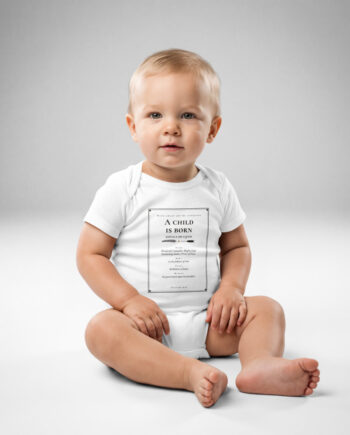
Unto Us a Child Is Born | Isaiah 9:6 Christmas Tee, Crewneck & Bodysuit
Price range: $24.00 through $56.00 Select options This product has multiple variants. The options may be chosen on the product page


Keep reading
- Youth Group Shirt Ideas: Christian Tees Teens Will Actually WearChristian Living
- Christian Gifts for Dad: 8 Faith-Based Gifts He Will UseChristian Living
- Who You Are in Christ: Your Identity, and the Shirts That Say It Out LoudChristian Living
- Bible Verse T-Shirts: How to Wear Scripture That Actually Means SomethingBible Study
- The Night Everything ChangedFaith & Encouragement
- Job 23:1-17: When You Can’t Sense God’s Presence In Your SufferingFaith & Encouragement
More in: Faith & Encouragement · All articles