The Scene: A Delay That Felt Like Abandonment

The God who could have come sooner chose not to — and that changes everything
The Scene: A Delay That Felt Like Abandonment
The stage is set in Bethany, a small village about two miles from Jerusalem. Martha, Mary, and their brother Lazarus were close friends of Jesus — the kind of friends whose home was a refuge for Him during His ministry. When Lazarus fell gravely ill, the sisters sent word to Jesus with a simple, faith-filled message: “Lord, the one you love is sick.” They didn’t have to spell it out. They trusted He would come.
But Jesus didn’t come. Not immediately. In fact, John tells us something startling: when Jesus heard Lazarus was sick, He deliberately stayed where He was for two more days. By the time Jesus arrived in Bethany, Lazarus had been dead for four days. The funeral was over. Hope was buried.
Read that again slowly. Jesus loved them — and because He loved them, He stayed away. This isn’t the cold indifference of a distant deity. This is the intentional delay of a God who sees beyond our immediate pain to a greater purpose.
Free Advent reading · December 1–25
25 Names of Christ
One name a day in your inbox: the verse it comes from, a short reflection, a one-line prayer. It ends on Christmas morning.
One email a day, December 1–25. Unsubscribe anytime.
Going Deeper: The Theology of Divine Delay
The original Greek word John uses for “stayed” is emeinen — it carries the sense of remaining, abiding, deliberately continuing in a place. Jesus wasn’t distracted or unaware. He was waiting. And His reason? “So that the Son of God may be glorified through it.” This isn’t divine ego; it’s divine revelation. God’s glory isn’t His reputation — it’s the full display of His character, His power, and His nature.
In first-century Jewish belief, the soul was thought to linger near the body for three days after death, hoping to return. After four days, decomposition began, and death was considered absolutely irreversible. By waiting until Lazarus had been dead four days, Jesus was ensuring that no one could claim this was resuscitation or a near-death recovery. This was resurrection — impossible by human standards, but effortless for God.
When Martha runs out to meet Jesus on the road, her first words cut to the heart: “Lord, if you had been here, my brother would not have died.” There’s faith in that statement — but also heartbreak. She believed Jesus could have prevented this. What she didn’t yet understand is that Jesus had something far greater in mind than prevention. He was planning resurrection.
Notice Jesus doesn’t say, “I perform resurrections” or “I have the power to resurrect.” He says, “I am the resurrection.” This isn’t just about Lazarus. This is about Jesus revealing His own identity as the source and embodiment of life itself. The delay wasn’t cruelty — it was revelation. God let the situation become humanly impossible so that His power would be unmistakably divine.
The Bridge to Our Lives: When God’s Silence Screams
How many of us are living in the gap between “Lord, if you had been here…” and “I am the resurrection”? We pray earnestly for healing, provision, reconciliation, breakthrough — and God seems to delay. Days turn into weeks, weeks into months, and the silence feels like abandonment. We begin to question: Does He really love me? Did I not have enough faith? Is He even listening?
Martha and Mary’s story teaches us that God’s delays are not evidence of His absence or indifference. Often, God waits because He’s preparing something greater than what we asked for. We pray for healing; He plans resurrection. We ask for relief; He’s orchestrating redemption. We want our circumstance changed; He wants our faith deepened.
This is the shortest verse in the Bible, but it’s one of the most profound. Even though Jesus knew He was about to raise Lazarus from the dead, He still wept at the graveside. He didn’t minimize their pain or scold their grief. He entered into it. This is the heart of our God — He is not unmoved by our suffering, even when He has purposes beyond our understanding. His delay doesn’t mean He doesn’t care. Sometimes, He delays because He cares so deeply about what He’s building in us and through us.
Living in the Space Between Prayer and Answer
What does it look like to trust God in the delay? It doesn’t mean suppressing honest questions or pretending we’re not hurt. Martha and Mary both confronted Jesus with their pain, and He received it. Trusting God in the delay means choosing to believe that His love is constant even when His timing is confusing.
Honest Lament is Faithful Prayer
Martha’s “if you had been here” wasn’t doubt — it was raw honesty. God invites us to bring our confusion, our disappointment, even our anger to Him. He’s big enough to handle our questions.
God’s Silence Doesn’t Mean Absence
Jesus was sovereign over Lazarus’s situation the entire time, even when He was physically miles away. God is working even when we can’t see or feel it. His silence is not His absence.
The Glory Comes After the Grave
Lazarus had to die before Jesus could demonstrate resurrection power. Sometimes God allows things to reach an end so He can show us He is the God of new beginnings. What looks like death to us may be the setup for glory.
The story ends with Jesus standing before a sealed tomb, commanding the stone to be rolled away. Martha protests — “Lord, by this time there will be an odor, for he has been dead four days.” Translation: It’s too late. It’s gone too far. Even you can’t fix this now.
It’s never too late for God. The delay that felt like denial was actually the setup for a display of divine power that would strengthen the faith of everyone who witnessed it — including us, thousands of years later. What the enemy meant for despair, God used for glory. What felt like abandonment was actually an invitation to see God do the impossible.
The Invitation: Trusting the God Who Sees Beyond the Grave
If you’re in a season of divine delay right now — if you’ve prayed and God seems silent, if the situation looks dead and hope feels buried — remember Martha and Mary. Remember that Jesus wept with them even as He prepared to resurrect their brother. Remember that God’s delays are not denials. He may be waiting because He has something greater in mind, something that will reveal His glory in ways a quick fix never could.
The question Jesus asked Martha, He asks us today: “Do you believe this?” Not believe that God can do miracles, but believe that He is the resurrection and the life — that even when everything looks dead, He is the source of life itself. Our circumstances may scream defeat, but our God speaks resurrection. Trust Him in the delay. The glory is coming.
Walk in Resurrection Faith
Let your faith be a testimony to the God who resurrects what seems dead. Explore our collection of faith-inspired apparel designed to encourage you and others in the journey of trusting God’s perfect timing.
Shop NowFrom the shop
Scripture to wear and give, printed to order.
-
✝1 John 1:9

Note to God | 1 John 1:9 Tee
Price range: $34.00 through $36.00 Select options This product has multiple variants. The options may be chosen on the product page -
✝John 19:30
It Is Finished | John 19:30 Soccer Tee
Price range: $34.00 through $36.00 Select options This product has multiple variants. The options may be chosen on the product page -
✝1 John 5:11
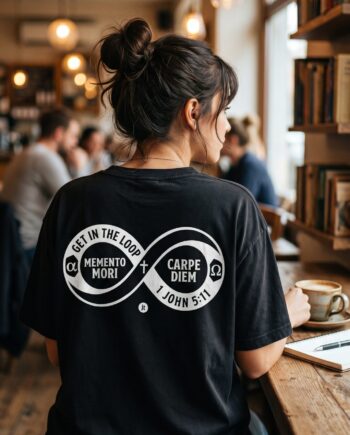
Get in the Loop | 1 John 5:11 Memento Mori Tee
Price range: $38.00 through $42.00 Select options This product has multiple variants. The options may be chosen on the product page


Keep reading
- Youth Group Shirt Ideas: Christian Tees Teens Will Actually WearChristian Living
- Christian Gifts for Dad: 8 Faith-Based Gifts He Will UseChristian Living
- Who You Are in Christ: Your Identity, and the Shirts That Say It Out LoudChristian Living
- Bible Verse T-Shirts: How to Wear Scripture That Actually Means SomethingBible Study
- The Fig Tree And The Farmer: Understanding God’s Patience In Your Season Of Growth (Luke 13:6-9)Faith & Encouragement
- The Man Who Ran Out of Places to HideFaith & Encouragement
More in: Faith & Encouragement · All articles