The Scene at Jacob’s Well
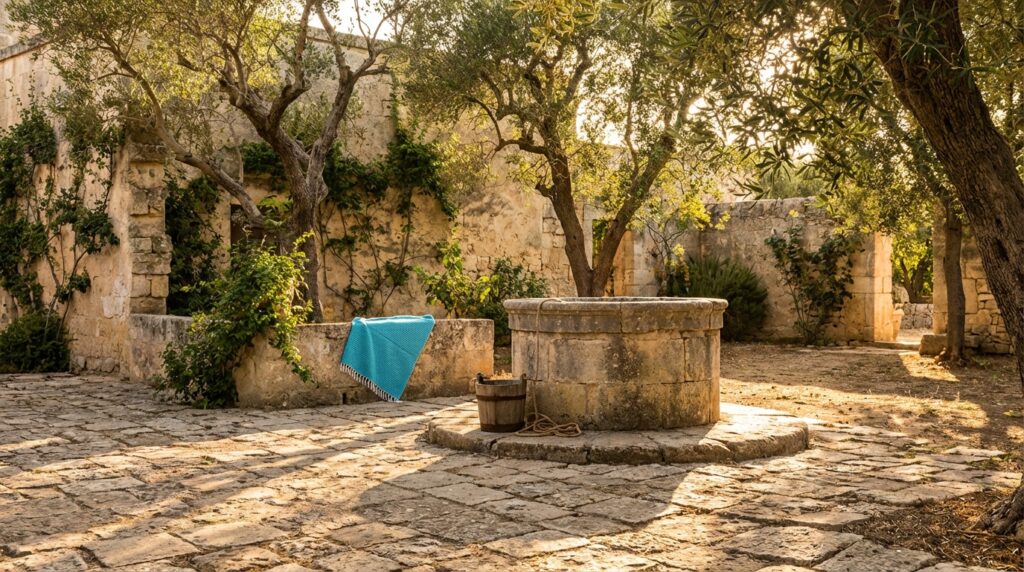
How a midday encounter at Jacob’s well reveals the God who pursues us in our hiding
The Scene at Jacob’s Well
John chapter 4 opens with Jesus doing something shocking: traveling through Samaria. Most Jews of his day would take the long route around Samaria to avoid contact with Samaritans—a people they considered religiously compromised and ethnically impure. But Jesus, we’re told, “had to go through Samaria.” Not geographically—morally. Divinely. There was someone there he needed to meet.
He arrives at Jacob’s well around noon, exhausted from the journey, while his disciples go into town for food. And that’s when she appears—a Samaritan woman, alone, in the heat of the day. The timing itself tells a story. Women typically drew water in the cool of morning or evening, gathering in groups, sharing news and conversation. But this woman comes at noon, when the well is empty, when she won’t have to face the whispers and sidelong glances of respectable women who know her story.
Notice the layers of barrier-breaking here. Jesus speaks to a woman (culturally inappropriate for a rabbi). A Samaritan woman (crossing ethnic boundaries). A Samaritan woman with a reputation (crossing moral boundaries). And he doesn’t just acknowledge her—he asks her for something, placing himself in a position of need. He initiates. He dignifies. He sees.
Free Advent reading · December 1–25
25 Names of Christ
One name a day in your inbox: the verse it comes from, a short reflection, a one-line prayer. It ends on Christmas morning.
One email a day, December 1–25. Unsubscribe anytime.
The Conversation That Changes Everything
What follows is one of the most tender and theologically rich conversations in all of Scripture. Jesus offers her “living water”—water that will quench thirst forever. She’s intrigued but still thinking literally, practically: this would save her the daily shame of coming to the well. But then Jesus does something that feels, at first, like a trap.
This moment could be devastating. Jesus has just exposed the very thing she came at noon to hide from. Five failed marriages in a culture where a woman’s worth was tied to her marital status. Five times rejected, discarded, or widowed. And now living with a man who won’t even marry her. This is her deepest shame, laid bare by a stranger at a well.
But watch what happens. She doesn’t run. She doesn’t collapse in humiliation. Instead, something in how Jesus speaks—the tone, the lack of condemnation, the matter-of-fact acknowledgment without disgust—makes her want to keep talking. She recognizes him as a prophet and immediately brings up the deepest theological question her community wrestles with: where is the proper place to worship God?
The five husbands likely weren’t all divorces of her choosing. In first-century Samaria, women had no right to initiate divorce—only men did. Some of these marriages probably ended in widowhood or abandonment. Her situation reveals a life of profound loss and rejection, not necessarily moral failure. Yet even if poor choices were involved, Jesus’ response remains remarkable: he doesn’t shame, lecture, or demand repentance before relationship. He offers living water first.
And here’s where Jesus reveals something stunning. He tells her that the time is coming—indeed, has now come—when true worshipers will worship the Father in spirit and truth. Not on this mountain or in Jerusalem. Not based on ethnic purity or moral performance. But in spirit and in truth. And then, in a moment he rarely grants even his closest disciples, he reveals his identity directly.
When Shame Meets the Living Water
Think about what just happened. A woman who came to the well to avoid being seen just had the longest recorded conversation Jesus has with anyone in the Gospels. A woman whose past disqualified her from respect in her community becomes the first person to whom Jesus explicitly reveals himself as Messiah. A woman who hid in the noon hour becomes the first evangelist to her entire town.
This is the scandalous, upside-down grace of the gospel. Jesus doesn’t meet us after we’ve cleaned ourselves up. He meets us at the well, at noon, when we’re hiding. He brings up the very things we’re most ashamed of—not to condemn us, but to show us he already knows, and he’s still here, still offering living water, still calling us into relationship.
The living water Jesus offers isn’t just forgiveness—though it includes that. It’s not just eternal life—though it promises that. It’s the end of thirst. The end of striving to fill the void with another relationship, another achievement, another image we project to hide who we really are. It’s the soul-deep satisfaction of being fully known and fully loved.
She Came in Hiding
Arranging her life to avoid shame, timing her day around her reputation, carrying the weight of judgment and failure alone in the heat of the day.
She Left in Freedom
Running back to the very people she’d been avoiding, saying “Come, see a man who told me everything I ever did”—her shame transformed into testimony.
The Invitation to Come Out of Hiding
Here’s what this means for us: the things you’re most ashamed of are not disqualifications from God’s presence—they’re often the very places where he wants to meet you most intimately. The parts of your story you edit out, the failures you hide, the patterns you can’t seem to break—Jesus already knows. And he’s not waiting for you to fix them before he offers you living water.
The woman at the well teaches us that transformation doesn’t come from hiding our shame better or managing our image more carefully. It comes from an encounter with someone who sees us completely and loves us specifically. Who doesn’t offer us tips for better living but himself—living water that becomes in us a spring welling up to eternal life.
Notice what she leaves behind: her water jar. The very thing she came for, she no longer needs. She came for water; she found the source. She came at noon to hide; she returns in broad daylight to tell everyone. The encounter with Jesus doesn’t just change her theology—it changes her entire orientation to life, to community, to herself.
This is the promise of the living water: not that life becomes easy or that your past is erased, but that you’re so satisfied in being known and loved by God that you stop arranging your life around shame. You stop timing your days to avoid exposure. You discover that the God who sees everything is the same God who calls you beloved, chosen, his own.
Carry This Truth With You
Let the story of the woman at the well remind you daily that Jesus meets us in our hiding and calls us into freedom. Explore our faith-inspired apparel and products that help you carry biblical truth into every part of your life.
Shop NowFrom the shop
Scripture to wear and give, printed to order.
-
✝1 John 1:9

Note to God | 1 John 1:9 Tee
Price range: $34.00 through $36.00 Select options This product has multiple variants. The options may be chosen on the product page -
✝John 19:30
It Is Finished | John 19:30 Soccer Tee
Price range: $34.00 through $36.00 Select options This product has multiple variants. The options may be chosen on the product page -
✝1 John 5:11
Get in the Loop | 1 John 5:11 Memento Mori Tee
Price range: $38.00 through $42.00 Select options This product has multiple variants. The options may be chosen on the product page



Keep reading
- Youth Group Shirt Ideas: Christian Tees Teens Will Actually WearChristian Living
- Christian Gifts for Dad: 8 Faith-Based Gifts He Will UseChristian Living
- Who You Are in Christ: Your Identity, and the Shirts That Say It Out LoudChristian Living
- Bible Verse T-Shirts: How to Wear Scripture That Actually Means SomethingBible Study
- The Call That Changed EverythingFaith & Encouragement
- When God Prepares a Table in the Presence of Your Enemies: The Psalm 23 Promise You May Have MisunderstoodBible Study
More in: Faith & Encouragement · All articles