The Longest Wait in Scripture
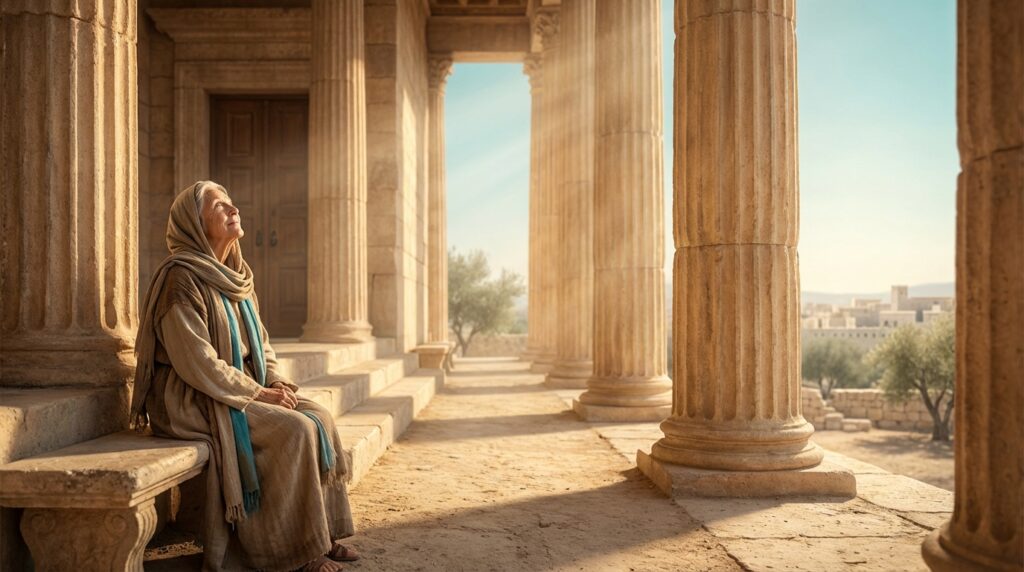
God’s delays aren’t His silence — they’re the shape His promise is taking
The Longest Wait in Scripture
When God first called Abram out of Ur, the promise was staggering: descendants as numerous as stars, land stretching to every horizon, blessing that would reach every family on earth. But there was a problem. Abram was seventy-five years old. His wife Sarai was barren. And God asked him to leave everything familiar and walk toward a promise that seemed biologically impossible.
What often gets lost in Sunday school retellings is the timeline. From this initial promise to the birth of Isaac—the child of promise—twenty-five years would pass. Twenty-five years of waiting. Twenty-five years of wondering. Twenty-five years of seeing his body grow older and the promise seem more impossible with each passing season. This wasn’t a brief test of patience. This was a quarter-century education in what it means to believe God when circumstances scream otherwise.
The narrative of Genesis 12-21 is punctuated by moments where God reaffirms the promise, yet the fulfillment remains maddeningly out of reach. Abraham and Sarah try to help God along—resulting in the painful Hagar and Ishmael episode. They laugh at the impossibility. They question. They struggle. And through it all, God continues to say: “Trust me. I will do what I promised.”
Free Advent reading · December 1–25
25 Names of Christ
One name a day in your inbox: the verse it comes from, a short reflection, a one-line prayer. It ends on Christmas morning.
One email a day, December 1–25. Unsubscribe anytime.
What the Text Reveals About Waiting
The Hebrew word used throughout Abraham’s story for God’s promises is dabar—a term that means not just spoken words, but active, creative, powerful speech. When God speaks a dabar, it carries the force to accomplish itself. His word is not information; it is causation. What He declares will come to pass, but not necessarily on our timetable.
In Genesis 15, when Abraham expresses doubt about how the promise could possibly happen, God responds with a covenant ceremony. He puts Abraham into a deep sleep and passes through the divided animals Himself—taking on the full weight of keeping the promise. In ancient Near Eastern covenant rituals, both parties would walk between the pieces, saying essentially, “May what happened to these animals happen to me if I break this covenant.” But God alone walks through. The promise depends entirely on His faithfulness, not Abraham’s performance. This is why Paul later writes that Abraham’s faith was “credited to him as righteousness”—because he trusted the character of the Promise-Maker, not his own ability to make it happen.
Genesis 15:6 becomes the hinge verse: “Abram believed the LORD, and he credited it to him as righteousness.” This simple statement contains profound theology. Abraham’s faith wasn’t optimistic feelings or positive thinking. It was a settled conviction that God’s character made His promises certain, even when Abraham couldn’t see the path from here to there.
Notice what Paul emphasizes: Abraham didn’t deny reality. He “faced the fact” of biological impossibility. Faith doesn’t require us to pretend circumstances aren’t difficult. It requires us to believe that God is bigger than the circumstances. Abraham’s faith grew stronger precisely by wrestling with the gap between promise and reality, not by ignoring it.
When God’s Silence Feels Like Absence
The hardest part of waiting isn’t the passage of time—it’s the silence that often accompanies it. Between Genesis 12 and Genesis 21, there are long stretches where God doesn’t speak. Abraham moves, builds altars, fights battles, makes mistakes, and lives ordinary days where heaven seems quiet. And this is where most of us live too.
We can handle waiting if we know the date. We can endure difficulty if we understand the purpose. But indefinite waiting with no clear word from God? That’s where faith feels less like confident trust and more like gritting your teeth in the dark, hoping you haven’t been abandoned.
Yet Abraham’s story teaches us that God’s silence is not His absence. The promise given at seventy-five was still operative at ninety-nine. The word spoken in Ur was still true in Canaan. What God declares remains in force even when He seems quiet. His promises don’t have expiration dates.
The Test of Time
Waiting exposes what we truly believe about God’s character. Do we trust His goodness only when we see immediate results? Or can we believe He is good even in the gap between promise and fulfillment?
The Temptation to Help
Like Sarah suggesting Hagar, we’re often tempted to make God’s promises happen through our own schemes. But faith waits for God’s methods, not just His outcomes. The how matters as much as the what.
The Strengthening in Struggle
Romans tells us Abraham’s faith grew stronger through the waiting. The delay wasn’t wasted time—it was the very process by which surface-level belief became unshakeable conviction.
Living Between Promise and Fulfillment
Every believer lives in an Abrahamic moment. We have promises from God—for His presence, His provision, His purposes working out for good, His ultimate restoration of all things. And we have present reality—which often looks nothing like those promises. The question is: what do we do in the gap?
Faith is not pretending the gap doesn’t exist. It’s not toxic positivity that denies pain or difficulty. Biblical faith looks squarely at the impossibility and says, “Yet God.” It faces the dead womb, the dried-up resources, the impossible odds, and declares that God’s word is more real than present circumstances.
This kind of faith isn’t passive resignation. Abraham continued to live, to move, to build, to make decisions. But he did so anchored to the promise, not driven by panic over its delay. He learned to hold God’s word in one hand and his daily responsibilities in the other, trusting that somehow, in God’s timing and God’s way, the two would meet.
What promise are you waiting on? What word from God seems increasingly impossible as time passes? Abraham’s story doesn’t give us a timeline, but it gives us something better: a testimony that God keeps His word, that waiting is never wasted in His economy, and that the faith forged in the furnace of delay becomes the bedrock on which He builds His purposes.
The key phrase is “after waiting patiently.” Not after figuring it out. Not after taking control. Not after demanding answers. After waiting—with patient, persevering trust in the character of the God who cannot lie. When Isaac finally arrived, he was the fulfillment of a promise, but also the fruit of a faith tested and proven true. God wasn’t just giving Abraham a son. He was giving the world a model of what it looks like to believe Him when everything else argues against it.
Your wait is not evidence of God’s failure. It may be the very space in which He is building the kind of faith that will sustain you not just through this trial, but through everything that’s coming. The promise-keeping God who brought Isaac from a dead womb is still at work, even in your silence, even in your waiting, even now.
Walk in Faith Every Day
Let your faith journey be visible. Explore our collection of faith-inspired apparel and products that help you carry truth wherever you go—reminders that God’s promises never fail.
Shop NowFrom the shop
Scripture to wear and give, printed to order.
-
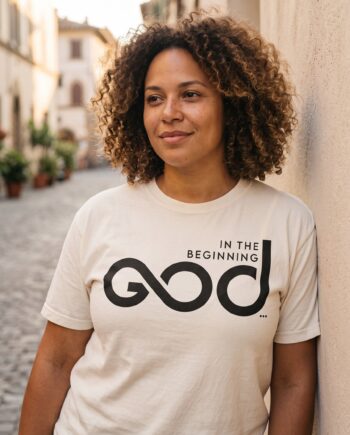
✝Genesis 1:1

Elohim | Genesis 1:1 Tee
Price range: $34.00 through $40.00 Select options This product has multiple variants. The options may be chosen on the product page -
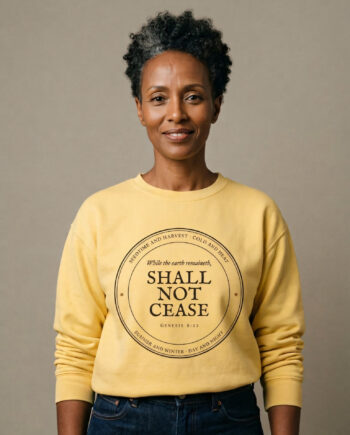
✝Genesis 8:22
Seedtime and Harvest Shall Not Cease | Genesis 8:22 Tee & Sweatshirt
Price range: $34.00 through $72.00 Select options This product has multiple variants. The options may be chosen on the product page -
✝Genesis 8:22
Seedtime and Harvest Shall Not Cease | Genesis 8:22 Print
Price range: $29.00 through $99.00 Select options This product has multiple variants. The options may be chosen on the product page

Keep reading
- Youth Group Shirt Ideas: Christian Tees Teens Will Actually WearChristian Living
- Christian Gifts for Dad: 8 Faith-Based Gifts He Will UseChristian Living
- Who You Are in Christ: Your Identity, and the Shirts That Say It Out LoudChristian Living
- Bible Verse T-Shirts: How to Wear Scripture That Actually Means SomethingBible Study
- Job 23:1-17: When You Can’t Sense God’s Presence In Your SufferingFaith & Encouragement
- The Fig Tree And The Farmer: Understanding God’s Patience In Your Season Of Growth (Luke 13:6-9)Faith & Encouragement
More in: Faith & Encouragement · All articles