A Prophet on the Run

God’s most powerful word often comes in a whisper, not a shout
A Prophet on the Run
Elijah stands as one of the most dramatic figures in Scripture—a prophet who called down fire from heaven, who confronted kings and defeated false prophets on Mount Carmel. In 1 Kings 18, we see him at his peak: bold, powerful, victorious. But chapter 19 opens with a jarring shift. Queen Jezebel threatens his life, and this same man who faced down 450 prophets of Baal suddenly runs for his life into the wilderness.
He’s exhausted. He’s afraid. He sits under a broom tree and asks God to let him die. This isn’t just physical fatigue—it’s spiritual depletion, the collapse that often follows great victory. God sends an angel to feed him, to give him strength for a forty-day journey to Mount Horeb, the mountain of God. And there, in a cave, the Lord meets him.
Free Advent reading · December 1–25
25 Names of Christ
One name a day in your inbox: the verse it comes from, a short reflection, a one-line prayer. It ends on Christmas morning.
One email a day, December 1–25. Unsubscribe anytime.
The God Who Isn’t Where We Expect
The Hebrew phrase translated “still small voice” is fascinating. The word for “still” is damam, which can mean silence, stillness, or calm. The word for “small” or “gentle” is daq, meaning thin, fine, or crushed. Some translations render it “a gentle whisper” or “a sound of sheer silence.” It’s almost a paradox—a voice that is also silence, a communication so subtle it requires complete attention to perceive.
God demonstrates His power through wind, earthquake, and fire—all the dramatic displays Elijah might have expected after his Mount Carmel experience. These are the kinds of manifestations Israel knew from Sinai, from the Exodus, from generations of God’s mighty acts. But God is not in them. He passes by them. And then, in the quietness that follows, He speaks.
Mount Horeb is another name for Mount Sinai, where God gave Moses the Law amid thunder, lightning, and the sound of a trumpet growing louder and louder (Exodus 19:16-19). By returning Elijah to this same mountain but speaking differently—in whisper rather than thunder—God reveals that His nature isn’t confined to one mode of communication. The same God who shook Sinai can speak in silence. He meets us where we are, not just where He’s been before.
This encounter reorients everything Elijah thinks about how God works. The prophet has just witnessed spectacular power on Mount Carmel. He expects more spectacle. Instead, God teaches him that divine presence isn’t measured by volume or intensity. Sometimes the most transformative word comes not in the earthquake of circumstances but in the stillness of intentional listening.
When Silence Speaks Louder Than Answers
Notice what happens when Elijah hears the still small voice: he covers his face and steps out. This is reverence, recognition, response. The whisper accomplishes what the wind, earthquake, and fire could not—it draws him out of hiding. And God doesn’t immediately answer all his questions or resolve all his fears. Instead, He asks: “What are you doing here, Elijah?”
God already knows the answer. But He invites Elijah to speak it, to voice his despair and confusion. The question itself is the beginning of healing. In our own lives, we often want God to speak so He can give us solutions, strategies, three-step plans. But sometimes His word is simply His presence—the assurance that He is listening, that we are not alone in the cave of our fear and exhaustion.
Elijah pours out his complaint: he’s been zealous for the Lord, but he feels utterly alone, the only faithful one left, and his life is threatened. God doesn’t rebuke him for his feelings. Instead, He gives him a mission: anoint new kings, anoint a successor, and know this—you’re not alone. There are seven thousand in Israel who have not bowed to Baal. God’s work is bigger than what Elijah can see from inside his cave.
Learning to Listen in Our Own Wilderness
How many of us are waiting for God to show up in the earthquake? We pray for unmistakable signs, for circumstances so dramatic that we can’t miss His direction. We want the clarity of fire from heaven. And God, in His kindness, sometimes gives us that. But more often—perhaps especially in seasons of weariness or confusion—He speaks in the whisper that requires us to be still, to quiet the noise, to lean in with every part of our attention.
The Practice of Stillness
Elijah had to stand still on the mountain. He had to wait through the wind, the earthquake, the fire. Hearing God’s whisper required him to stop running, stop striving, stop expecting. In our own lives, this might mean carving out actual silence—turning off devices, sitting with Scripture without rushing to the next thing, creating space where God’s gentle voice can be heard above the roar of our anxieties.
The Invitation to Honesty
God asked Elijah what he was doing there, and Elijah answered with raw honesty about his fear and isolation. We don’t have to clean up our prayers or pretend we’re stronger than we are. God’s whisper often comes in response to our honest cries, not our polished petitions. He meets us in our caves, not just on our mountaintops.
The Promise of Presence
God didn’t remove Jezebel’s threat or change Elijah’s circumstances immediately. But He reminded Elijah that he wasn’t alone—both in the presence of God Himself and in the community of the faithful. Sometimes the still small voice doesn’t give us answers; it gives us companionship. And that is enough to send us back into the world with renewed purpose.
The invitation of this passage isn’t to manufacture spiritual experiences or to force ourselves into silence as a technique. It’s to recognize that God is already speaking, already present, already at work—often in ways quieter and more intimate than we expect. The question isn’t whether God will show up dramatically enough for us to notice. The question is whether we’ll cultivate the kind of attentiveness that can hear Him in the whisper.
Elijah went into that cave depleted and afraid. He came out with a mission, with hope, with the knowledge that God’s plan was larger than his despair. The still small voice didn’t erase his challenges, but it reframed them. It reminded him who God is and who he was in God’s story. That same voice is speaking still—not in the chaos, but in the quiet confidence that God is present, God is near, and God is enough.
Wear Your Faith
Let your clothing be a reminder of the truths that anchor you. Explore faith-inspired apparel designed to encourage you and spark conversations about the God who speaks in whispers and moves mountains.
Shop NowFrom the shop
Scripture to wear and give, printed to order.
-
✝Exodus 3:14

YHWH | Exodus 3:14 Hoodie
Price range: $68.00 through $74.00 Select options This product has multiple variants. The options may be chosen on the product page -
✝Psalm 46:5
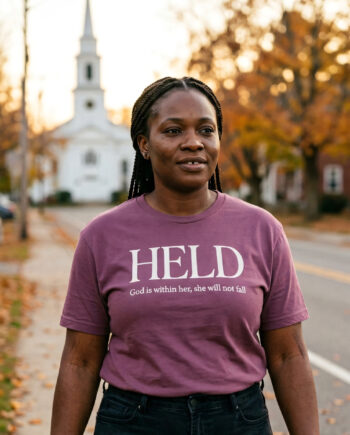
Held | Psalm 46:5 Tee for Women
Price range: $34.00 through $38.00 Select options This product has multiple variants. The options may be chosen on the product page -
✝Psalm 46:10
Coffee and Quiet Time Retro Hoodie | Psalm 46:10
Price range: $49.00 through $51.00 Select options This product has multiple variants. The options may be chosen on the product page


Keep reading
- Youth Group Shirt Ideas: Christian Tees Teens Will Actually WearChristian Living
- Christian Gifts for Dad: 8 Faith-Based Gifts He Will UseChristian Living
- Who You Are in Christ: Your Identity, and the Shirts That Say It Out LoudChristian Living
- Bible Verse T-Shirts: How to Wear Scripture That Actually Means SomethingBible Study
- What Job’s Friends Teach Us About The Danger Of Right Theology With A Wrong HeartFaith & Encouragement
- The Promise That Waited DecadesFaith & Encouragement
More in: Faith & Encouragement · All articles